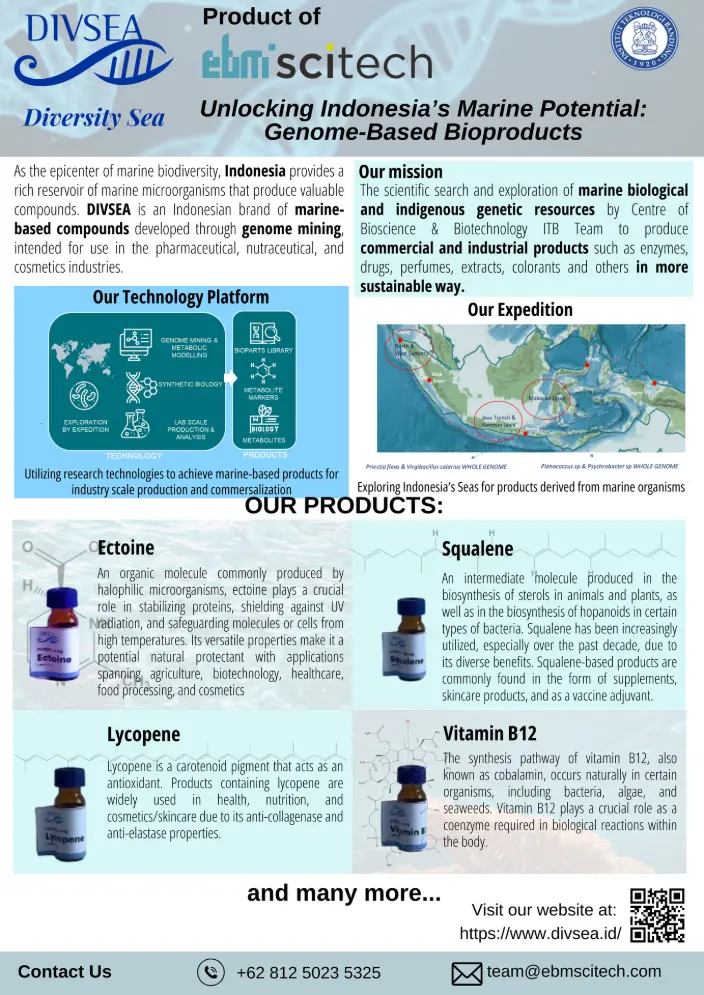
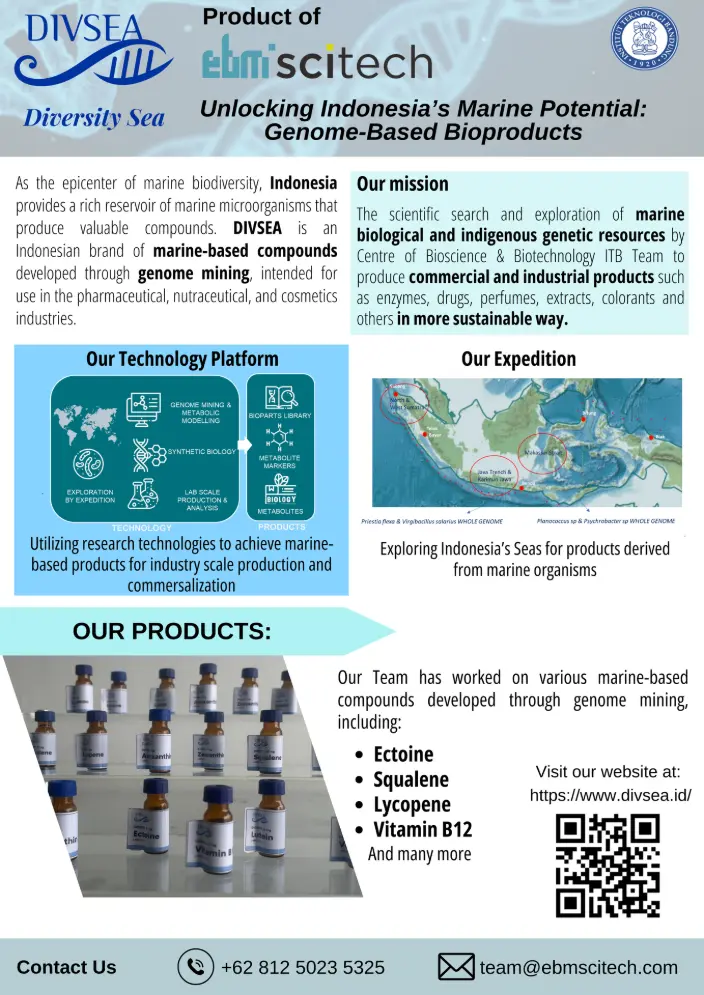
Our Products
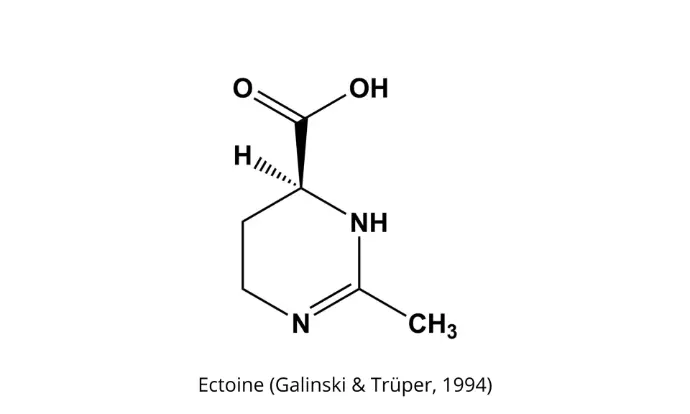
Ectoine
Ectoine (1,4,5,6-tetrahydro-2-methyl-4-pyrimidine carboxylic acid) is an organic molecule commonly produced by halophilic microorganisms as a response and protection against high salt concentrations in the environment. Ectoine, often referred to as a chemical chaperone, plays a crucial role in stabilizing proteins, shielding against UV radiation, and safeguarding molecules or cells from high temperatures. Its versatile properties make it a potential natural protectant with applications spanning agriculture, biotechnology, healthcare, food processing, and cosmetics.
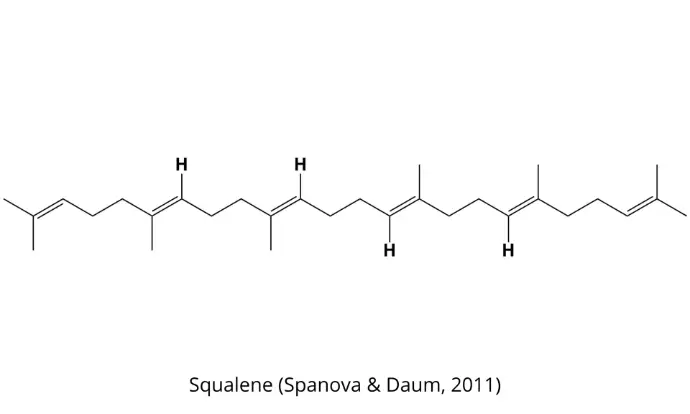
Squalene
Squalene (2, 6, 10, 15, 19, 23-hexamethyltetracosa-2, 6, 10, 14, 18, 22-hexaene) is an intermediate molecule produced in the biosynthesis of sterols in animals and plants, as well as in the biosynthesis of hopanoids in certain types of bacteria. Squalene has been increasingly utilized, especially over the past decade, due to its diverse benefits. Squalene-based products are commonly found in the form of supplements, skincare products, and as a vaccine adjuvant.
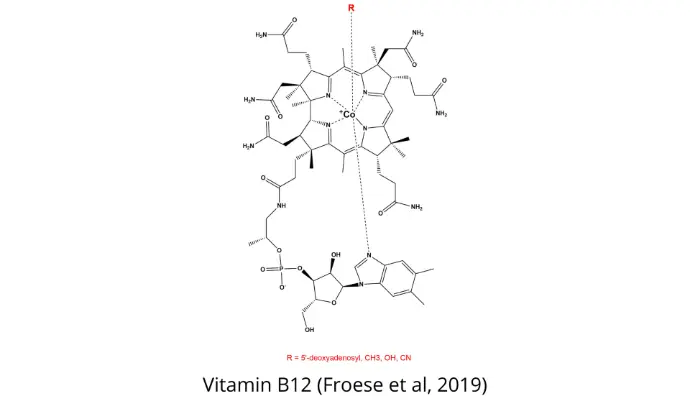
Vitamin B12
The synthesis pathway of vitamin B12, also known as cobalamin, occurs naturally in certain organisms, including bacteria, algae, and seaweeds. Vitamin B12 plays a crucial role as a coenzyme required in biological reactions within the body.
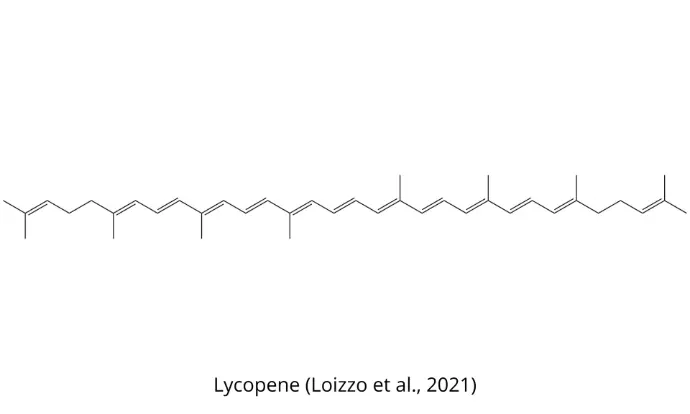
Lycopene
Lycopene is a carotenoid pigment that acts as an antioxidant. Products containing lycopene are widely used in health, nutrition, and cosmetics/skincare due to its anti-collagenase and anti-elastase properties.
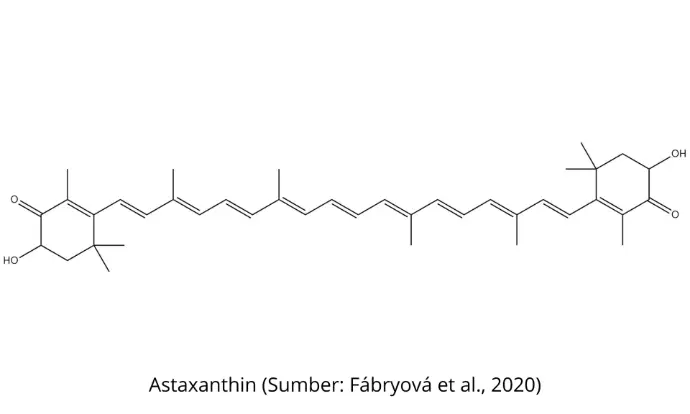
Astaxanthin
Astaxanthin (3,3’-dihydroxy-4,4’-diketo-b-carotene) is a carotenoid pigment commonly found in marine and freshwater animals1,2. It is the most powerful natural antioxidants, 10 times more capable than other carotenoids2,3. Astaxanthin is commonly used in dietary supplement products intended for human, animal, and aquaculture consumption, as well as a food coloring (or color additive)2. In addition to being an antioxidant, astaxanthin has also been clinically and experimentally proven to be important for cardiovascular health, eye health, brain health, sports-related activities, skin health, diabetes mellitus and metabolic syndrome, cancer health, as well as various other diseases4.
Reference:
- Johnson EA, Villa TG, Lewis MJ, Phaff HJ. 1978. Simple Method for the Isolation of Astaxanthin from the Basidiomycetous Yeast Phaffia rhodozyma. Appl Environ Microbiol 35(6): 1155-1159.
- Ushakumari UN, Ramanujan R. 2013. Isolation of astaxanthin from marine yeast and study of its pharmacological activity. Int Curr Pharm J 2(3): 67-69.
- Fábryová T, Tůmová L, da Silva DC, Pereira DM, Andrade PB, Valentão P, Hrouzek P, Kopecký J, Cheel J. 2020. Isolation of astaxanthin monoesters from the microalgae Haematococcus pluvialis by high performance countercurrent chromatography (HPCCC) combined with high performance liquid chromatography (HPLC). Algal Res 49(101947): 1-11. doi: 10.1016/j.algal.2020.101947
- Ekpe L, Inaku K, Ekpe V. 2018. Review Article: Antioxidant effects of astaxanthin in various diseases-areview. J Mol Pathophysiol 7(1): 1-6. doi: 10.5455/jmp.20180627120817
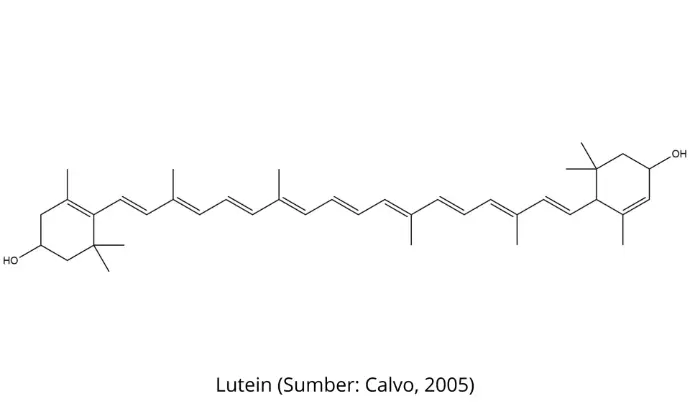
Lutein
Lutein ((3R,3’R,6’R)b,e-carotene-3,3’-diol) is a fat-soluble carotenoid pigment, consisting of 40 carbons with sequence of dominant, conjugated double bonds. It is believed that the presence of double bonds in their structure has led to their prominent color and ability supply free radicals1. It has pharmacological activity as a anti-inflammatory, antimicrobial, neuro, hepato and cardioprotective effects, antiplasmodial, skin protection, antiosteoporosis, antidiabetic, anticancer, treatment for optic nerve injury, and treatment for severe traumatic brain injury1,2.
Reference:
- Fuad NIN, Sekar M, Gan SH, Lum PT, Vaijanathappa J, Ravi S. 2020. Lutein: A Comprehensive Review on its Chemical, Biological Activities and Therapeutic Potentials. Pharmacogn J 12(6): 1769-1778. doi: 10.5530/pj.2020.12.239
- Mitra S, Rauf A, Tareq AM, Jahan S, Emran TB, Shahriar TG, Dhama K, Alhumaydhi FA, Aljohani ASM, Rebezov M, Uddin MS, Jeandet P, Shah ZA, Shariati MA, Rengasamy KRR. 2021. Potential health benefits of carotenoid lutein: An updated review. Food Chem Toxicol 154(112328): 1-13. doi: 10.1016/j.fct.2021.112328
- Calvo MM. 2005. Lutein: A Valuable Ingredient of Fruit and Vegetables. Crit Rev Food Sc Nutr 45: 671-696. doi: 10.1080/10408690590957034
Zeaxanthin
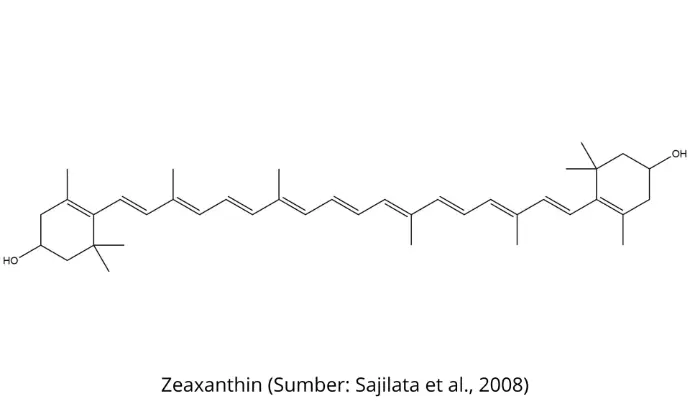
Zeaxanthin (3R, 3′R-β,β-carotene-3,3′-diol) is the principal pigment in yellow corn (Zeaxanthin mays L.) and is an isomer of lutein; the two carotenoid alcohols differ only by the shift of double bonds, so in zeaxanthin all double bonds are conjugated. Zeaxanthin can also be found in egg yolks, orange and yellow vegetables and fruits, and is synthesized by green algae and microbial1,2. Zeaxanthin is important for eye and brain health2. It is also has antioxidant effect (physical and chemical actions)3, heart, liver and skin protection4,
Reference:
- Sajilata MG, Singhal RS, Kamat MY. 2008. The Carotene Pigment Zeaxanthin-A Review. Compr Rev Food Sci Food Saf 7: 29-49.
- Ramirez M. 2016. Why lutein is important for the eye and the brain. OCL 23(1): 1-6. doi: 10.1051/ocl/2015027
- Widomska J, Giovanni JPS, Subczynski WK. 2020. Why is zeaxanthin the most concentrated xanthopyll in the Central Fovea?. Nutr 12(1333): 1-25. doi: 10.3390/nu12051333
- Murillo AG, Hu S, Fernandez ML. 2019. Zeaxanthin: Metabolism, Properties, and Antioxidant Protection of Eyes, Heart, Liver, and Skin. Antioxidants 8(390): 1-18. doi: 10.3390/antiox8090390